
Rare Disease Day 2026: Showing Up, Speaking Up, and Making Rare Visible
- Trena J Myers
- Feb 27
- 3 min read
February 28 is Rare Disease Day — a global movement dedicated to equity in diagnosis, treatment, research, and care for the more than 300 million people worldwide living with a rare disease.
There are over 7,000 identified rare diseases, and yet nearly 95% still have no FDA-approved treatment. In the United States alone, an estimated 1 in 10 Americans are affected. Most rare diseases are genetic, chronic, and often invisible — which is exactly why visibility matters.
This year, I had the honor of spending Rare Disease Day in action — not just in awareness.
A Dreary Morning, A Powerful Mission
Thursday began gray and rainy — the kind of Georgia morning where the clouds sit low and heavy. But Beth Nguyen (cofounder of Rare STRIDES and Rare Wish) and I were anything but weighed down.
We headed to the Georgia State Capitol to meet with legislators.
While we received updates on bills currently in session, there was a clear acknowledgment that — because it’s an election year — legislative movement is slower and limited. Still, showing up matters. Conversations matter. Relationships matter.
Advocacy is rarely glamorous. It’s often waiting rooms, hallway conversations, quick updates, and planting seeds for future change. But seeds grow.
And we will continue planting them. 🌱






From Policy to Patients: Emory University
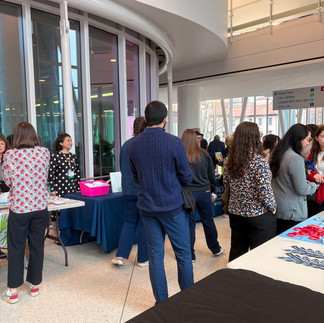
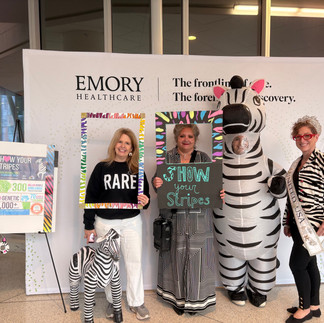
After the Capitol, we headed to Emory Hospital, where we participated in a tabling event alongside the Emory University Genetics Program.
The outreach focused on connecting with community members and hospital staff — sharing resources, educating about rare conditions, and introducing the work of Rare STRIDES and Rare Wish.
There is something powerful about standing in a hospital lobby talking about hope — especially in spaces where families are actively walking through diagnosis, uncertainty, and long medical journeys.
On Friday, we continued the momentum with another tabling event at the Emory University School of Public Health, engaging students and faculty about the public health impact of rare diseases.
Rare disease is not “rare” when you consider how many families are affected. It is a public health issue. It is a policy issue. It is a funding issue. It is a human issue.
The Spoon Theory: When Advocacy Has a Cost
If you’ve been in the chronic illness community for any amount of time, you’ve likely heard of The Spoon Theory.
The Spoon Theory, created by Christine Miserandino, is a metaphor used to explain the limited energy reserves many people with chronic illness live with daily.
Imagine you start the day with a certain number of “spoons.”
Every task — showering, driving, speaking, advocating, walking through a hospital, having conversations — costs a spoon.
When the spoons are gone… they’re gone.
Rare Disease Day was beautiful. It was meaningful. It was impactful.
And now?
My spoons are all used up.
I’m layered up.
Feet up.
Resting.
Because advocacy is powerful — but so is recovery.
As someone living in and advocating for the rare and invisible disease community, I have learned that rest is not weakness. It is stewardship. If we are going to continue showing up for our community, we must also protect our energy.
Why Rare Disease Day Matters
Rare Disease Day is about more than statistics.
It’s about:
The child waiting years for a diagnosis.
The parent researching at 2 a.m.
The adult navigating a workplace that doesn’t understand invisible illness.
The researchers and geneticists working tirelessly behind the scenes.
The advocates walking Capitol halls in the rain.
It’s about visibility.
Because when something is invisible, it is often overlooked.
When it is overlooked, it is underfunded.
When it is underfunded, families suffer.
Visibility changes policy.
Visibility drives research.
Visibility builds community.
Help Us #MakeRareVisible
This weekend, I invite you to do something simple — but powerful.
🖤 Wear your stripes.
Zebra stripes represent rare disease awareness (because medical students are taught, “When you hear hoofbeats, think horses — not zebras.” But sometimes, it is a zebra.)
📸 Take a photo.
🏷 Tag us.
📢 Use the hashtag #MakeRareVisible
Let’s flood the feed with stripes.
Let’s remind the world that rare is everywhere.
Let’s show legislators, hospitals, researchers, and communities that we are here — and we are not small in impact.
Today my spoons may be spent.
But the mission continues.
With gratitude,
Trena J. Myers
CEO-Cre8tive Hq
Ms. Elite United USA 2025
CEO-Rare Wish


Comments